
Welcome to this first blog post. I'm François Baillargeon, sysadmin and architect with 24 years of experience in virtualized platforms and storage.
Le stockage persistant fiable est le bloc fondamental de toute initiative TI. Une perte de données présente un risque sérieux — potentiellement existentiel. Au fil de ma carrière, j'ai évalué de nombreuses technologies : RAID local, SAN iSCSI traditionnel, Nutanix, TrueNAS Core. Chaque solution comportait ses limites.
Le problème
- Hard to scale horizontally
- Single points of failure (SPOF)
- High costs and supply lead times
- Vendor lock-in
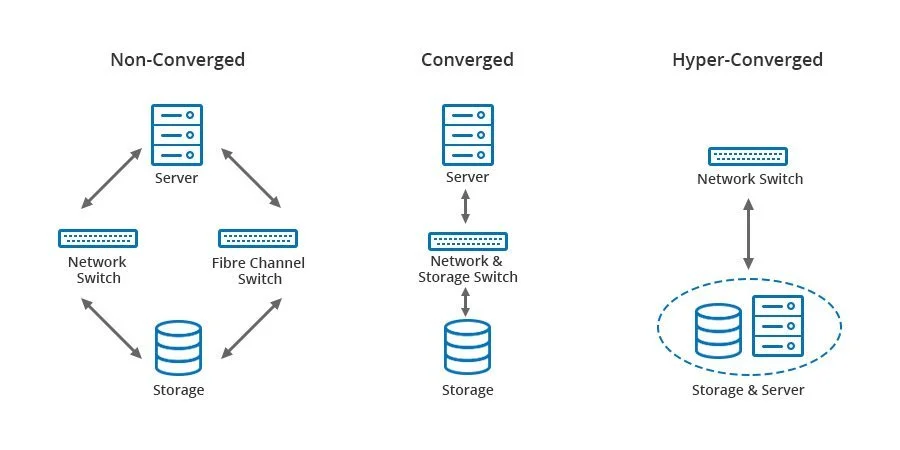
I was looking for storage that's "good enough" and scales — fast enough, affordable enough, resilient enough — targeting 99.999% availability.
Why not Nutanix
Nutanix offers self-healing, deduplication, compression, and KVM/VMware support. Impressive. But half the project cost went to software licenses. That observation pushed me to explore open-source alternatives.
Ceph as the answer
Ceph offers: block storage, file storage, self-healing, atomic snapshots, geo-distribution, inline compression, commodity-hardware compatibility. Outcomes:
- Infinite scalability by adding nodes
- No vendor lock-in
- "Ship of Theseus" design: replace 10–20% of nodes every three years
- Aucun SPOF
The follow-up — detailed design, hardware configuration, and benchmark results — is covered in the next post.
Original article by François Baillargeon.