
Reliable persistent storage is the foundation of any IT initiative. Data loss represents a major business-continuity risk.
Au fil des années, j'ai évalué plusieurs technologies — RAID local, SAN iSCSI traditionnels, Nutanix, TrueNAS Core. Chaque solution présentait ses limites : difficulté de mise à l'échelle, points uniques de défaillance, coûts élevés ou délais d'approvisionnement étirés. Je cherchais un stockage « correct » qui passe à l'échelle — assez rapide, assez abordable, assez résilient — avec un objectif de 99,999 % de disponibilité.
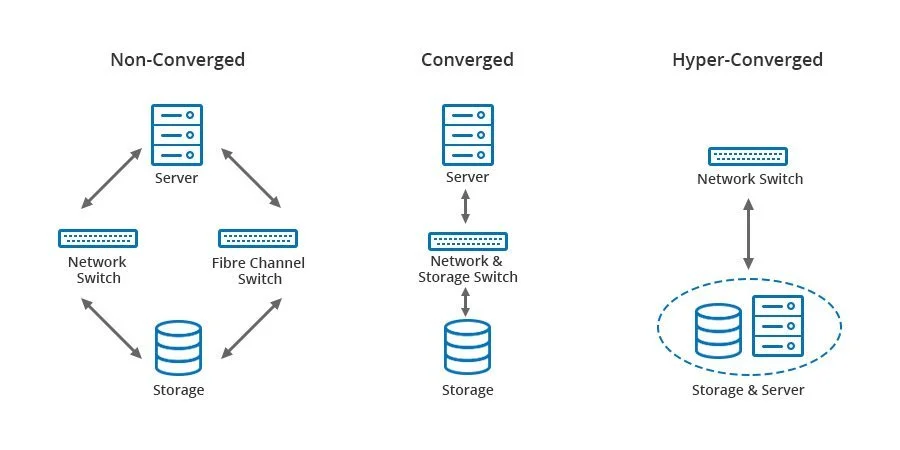
Pourquoi Ceph
While Nutanix impressed me, nearly half the budget went to licenses. That's where Ceph emerged: block storage, file storage, self-healing, atomic snapshots, geo-distribution, inline compression, commodity-hardware compatibility.

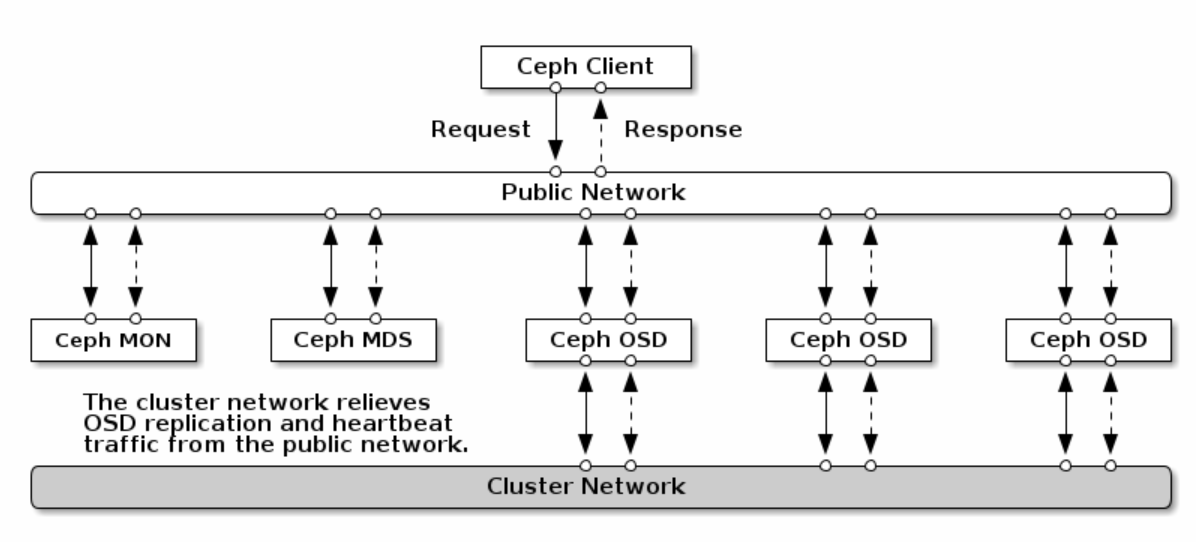
Node configuration (4 compute nodes)
- Proxmox 8.14 with Ceph Quincy
- Ryzen 3850X CPUs (8 cores, Zen2)
- 32 GB RAM per node (expandable to 256 GB)
- Intel X710 NICs — two 20 Gbps LACP channels
- Seagate Nytro Enterprise SATA SSDs as OSDs
Benchmark results (fio on RF3 pool + lz4 compression)
- 4K sequential reads, 16 threads: ~517,000 IOPS (2,018 MiB/s)
- 4K sequential writes: ~100,000 IOPS (392 MiB/s)
- 4M sequential reads: 2,811 MiB/s (23.6 Gbps)
- 4K random reads: ~47,000 IOPS (184 MiB/s)
For typical workloads with fewer than 100 concurrent users, results stay perfectly usable — with the bonus that you can grow horizontally just by adding nodes.
Original article by François Baillargeon.